Best suited to
Commercial and industrial buildings with new or existing concrete slabs.
Core service / UK-wide
Diamond-ground, densified and mechanically polished concrete floors delivered from slab assessment to final protection.
The right system
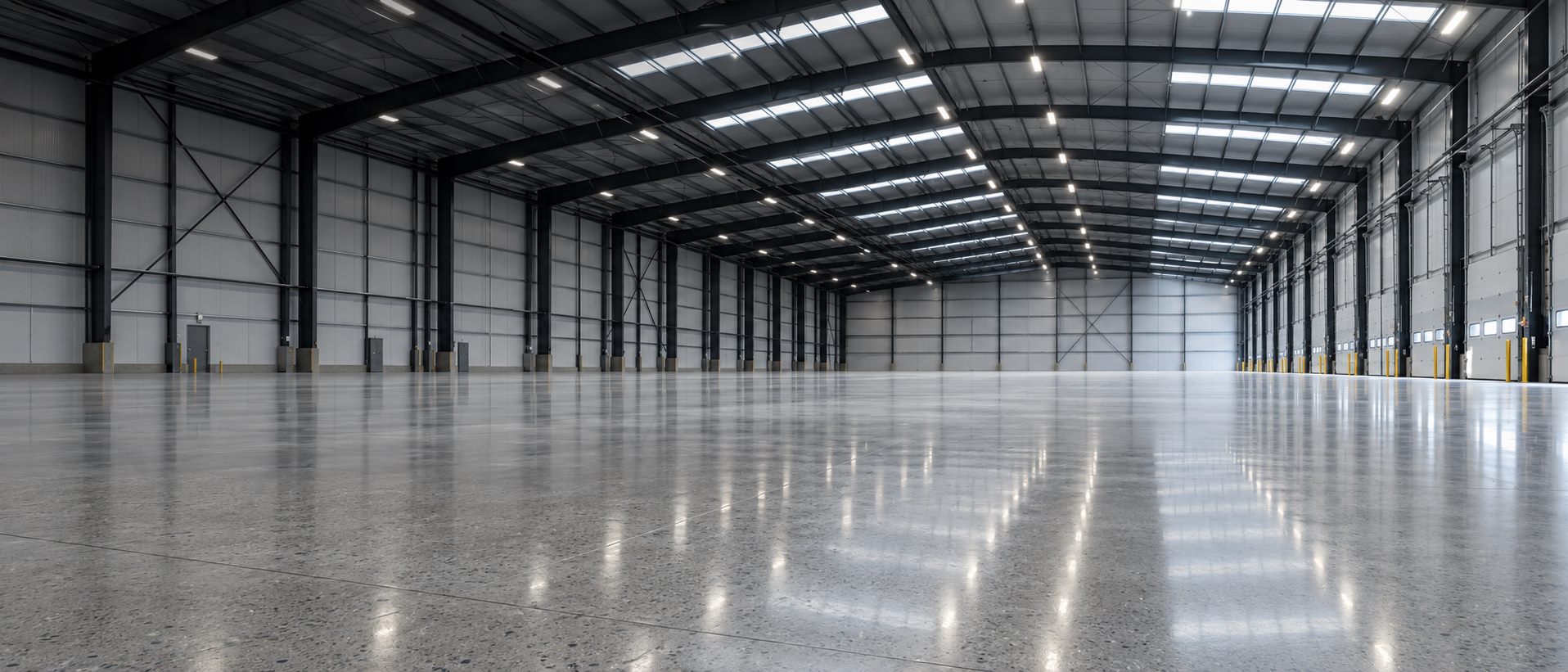
Concrete polishing is a mechanical process applied to a suitable existing or newly placed slab. The appearance comes from the concrete already on site: aggregate, colour variation, joints and repairs all remain part of the result.
The important early decision is whether the slab can meet the brief without an overlay. A survey and sample area should establish achievable aggregate exposure, sheen, edge finish and the work needed to deal with cracks or contamination.
Commercial and industrial buildings with new or existing concrete slabs.
A durable mechanically polished surface specified around exposure and sheen.
commercial and industrial projects.
Technical overview
Concrete polishing is a mechanical process that refines the surface of a suitable concrete slab with progressively finer diamond tooling. A densifier is used to strengthen the surface before the specified sheen and protective treatment are completed.
the structural slab can become the finished floor and lifecycle value, cleanability and a natural concrete appearance matter.
slab strength, flatness, curing history, contamination, previous coatings, repairs and the realistic level of aggregate exposure.
Aggregate exposure and sheen are separate choices. A mock-up should show likely tonal variation, repairs and edge treatment.
Use neutral cleaning chemistry, suitable auto-scrubber pads and prompt spill removal. Periodic burnishing or guard renewal depends on traffic and the specified finish.
Use polished screed where the existing slab cannot provide the required visual consistency or surface quality.
Specification framework
Record strength, flatness, cracks, joints, historic coatings, contamination and repairs before selecting the cut.
Agree aggregate exposure and sheen separately, with a representative trial including edges and repaired areas.
Describe wheeled and pedestrian traffic, spill exposure, slip considerations and required cleaning methods.
Allow for dust management, phased access, sample approval, protection and handover cleaning.
Delivery method
Condition, flatness, contamination, repairs, access and programme constraints are recorded.
Appearance, performance and realistic slab variation are agreed before full installation.
Our specialist team manages preparation, finishing, protection and handover.
Specification questions
Often, but suitability depends on soundness, flatness, previous finishes, contamination and repair history. A trial area is the clearest way to test the proposed finish.
No. Densifiers and protective treatments can improve cleanability, but concrete remains a porous material. Spill response and maintenance still matter.
Use the cleaning method and chemistry agreed for the finish; avoid aggressive products and abrasive pads that can damage protection or reduce sheen.
Start a conversation
Send the location, approximate area, construction stage, intended use and programme. Include plans or photographs if available; we can then discuss the most suitable next step.