Best suited to
Commercial interiors requiring a seamless, contemporary aesthetic.
Microcement / Floors
A refined hand-applied floor finish built up in thin, carefully controlled layers over a suitable substrate.
The right system
Microcement flooring is applied in thin layers over a prepared base to create a continuous, hand-finished surface. The appearance can cross spaces visually, but substrate movement and existing joints still need careful treatment.
Specify slip considerations, entrance matting, furniture protection, cleaning method and sealer renewal. Wet areas need a complete compatible build-up rather than a decorative coat alone.
Commercial interiors requiring a seamless, contemporary aesthetic.
A continuous low-build finish with considered colour and texture.
light-to-medium duty interior applications.
Technical overview
Microcement floors are low-build, hand-finished surfaces for stable interior substrates. Because the finish follows the base, preparation and movement control are critical to the final appearance and service life.
moderate-duty commercial spaces where seamless appearance is valued over heavy-industrial performance.
deflection, cracks, substrate joints, wet slip needs, furniture feet, entrance matting and approved cleaners.
Microcement is hand applied, so subtle trowel movement is intrinsic. Agree colour, texture and sealer sheen using a representative sample.
Use approved pH-neutral products, felt protection beneath movable furniture and rapid spill removal. Avoid abrasive pads or aggressive descalers unless approved.
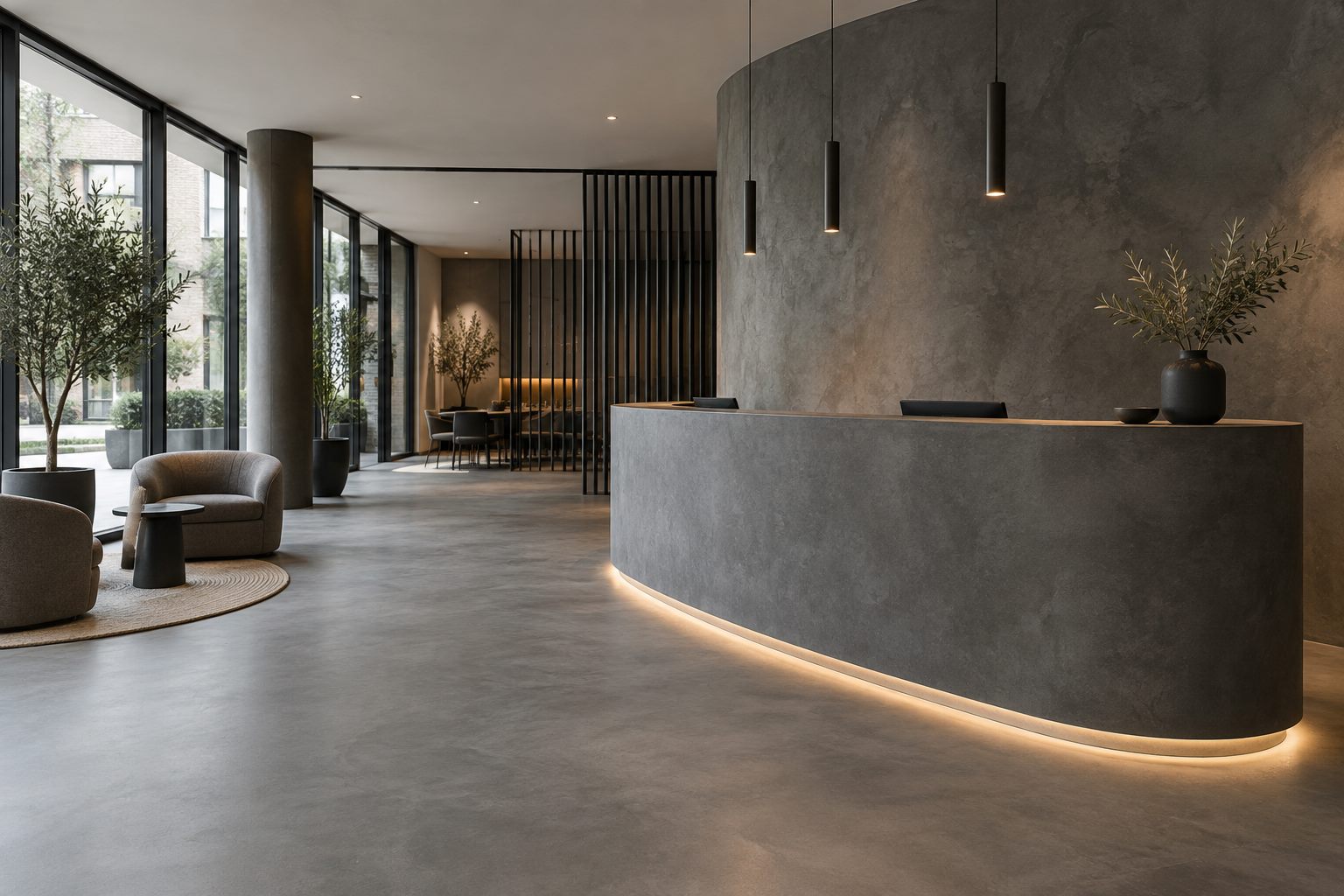
A polished cementitious screed provides greater mass and robustness for busier commercial floors.
Illustrative system image; agree the actual finish by sample.Specification framework
Confirm soundness, movement, moisture and compatibility with the complete layered system.
Resolve corners, joints, penetrations, thresholds and interfaces before application.
Approve colour, trowel texture and sealer sheen using a representative sample.
Define traffic, wet use, cleaning products, furniture protection and sealer maintenance.
Delivery method
Condition, flatness, contamination, repairs, access and programme constraints are recorded.
Appearance, performance and realistic slab variation are agreed before full installation.
Our specialist team manages preparation, finishing, protection and handover.
Specification questions
Not reliably. Active movement and cracks need assessment and treatment; some movement joints may need to remain expressed through the finish.
A decorative coat alone is not waterproofing. Wet areas require a compatible system and substrate detail designed for that use.
No. Hand application creates subtle variation; sample approval should establish the intended range of movement and tone.
Start a conversation
Send the location, approximate area, construction stage, intended use and programme. Include plans or photographs if available; we can then discuss the most suitable next step.