Best suited to
Hospitality, retail and workplace interiors.
Microcement / Walls
Carry one tactile cement-based finish across walls, counters and selected architectural elements.
The right system
Microcement can finish walls, joinery features and selected fitted surfaces to create a continuous architectural effect. Corners, fixtures, waterproofing and substrate stability are central to a lasting result.
Identify splash zones, cleaning products, penetrations and changes of substrate. Agree corner treatment and a sample of the hand-applied texture at the scale it will be seen.
Hospitality, retail and workplace interiors.
Material continuity across vertical and horizontal design features.
feature walls and selected architectural surfaces.
Technical overview
Microcement can continue across walls, counters and selected joinery substrates to create material continuity. Each background requires its own reinforcement, priming and edge-detail strategy.
feature walls, reception counters and coordinated commercial interior elements.
substrate type, board joints, corners, water exposure, fixing points, lighting and future access panels.
Microcement is hand applied, so subtle trowel movement is intrinsic. Agree colour, texture and sealer sheen using a representative sample.
Use approved pH-neutral products, felt protection beneath movable furniture and rapid spill removal. Avoid abrasive pads or aggressive descalers unless approved.
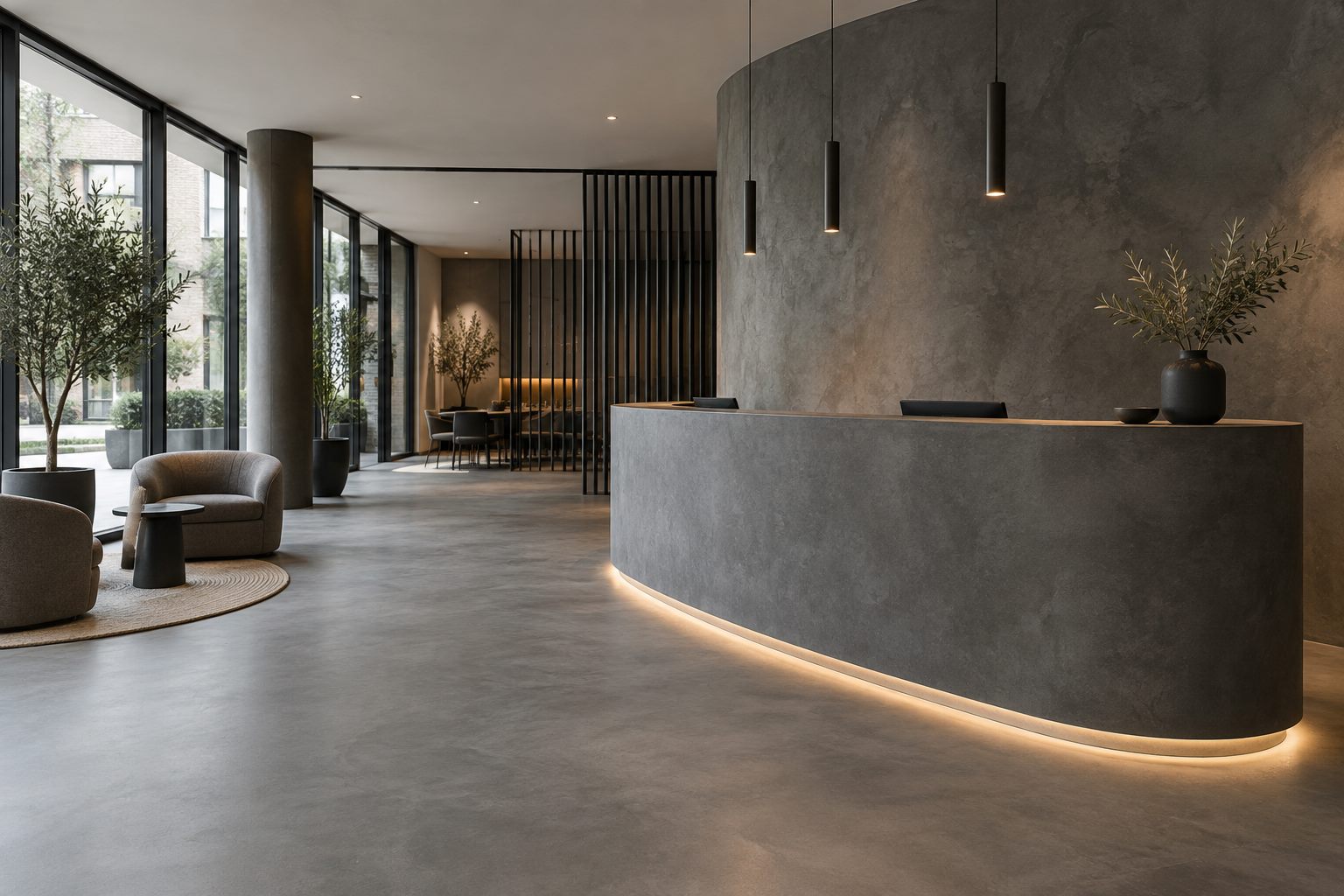
Use conventional plaster or panel finishes where frequent impact, movement or easy replacement is more important.
Illustrative system image; agree the actual finish by sample.Specification framework
Confirm soundness, movement, moisture and compatibility with the complete layered system.
Resolve corners, joints, penetrations, thresholds and interfaces before application.
Approve colour, trowel texture and sealer sheen using a representative sample.
Define traffic, wet use, cleaning products, furniture protection and sealer maintenance.
Delivery method
Condition, flatness, contamination, repairs, access and programme constraints are recorded.
Appearance, performance and realistic slab variation are agreed before full installation.
Our specialist team manages preparation, finishing, protection and handover.
Specification questions
No. The existing surface must be sound and compatible with the selected system; wet areas may need a separate waterproofing strategy.
A decorative coat alone is not waterproofing. Wet areas require a compatible system and substrate detail designed for that use.
No. Hand application creates subtle variation; sample approval should establish the intended range of movement and tone.
Start a conversation
Send the location, approximate area, construction stage, intended use and programme. Include plans or photographs if available; we can then discuss the most suitable next step.