Best suited to
Warehouses, production facilities, engineering plants and logistics buildings.
Concrete polishing / Industrial
Hard-wearing, dust-reduced concrete floors built for forklift traffic, production loads and demanding maintenance regimes.
The right system
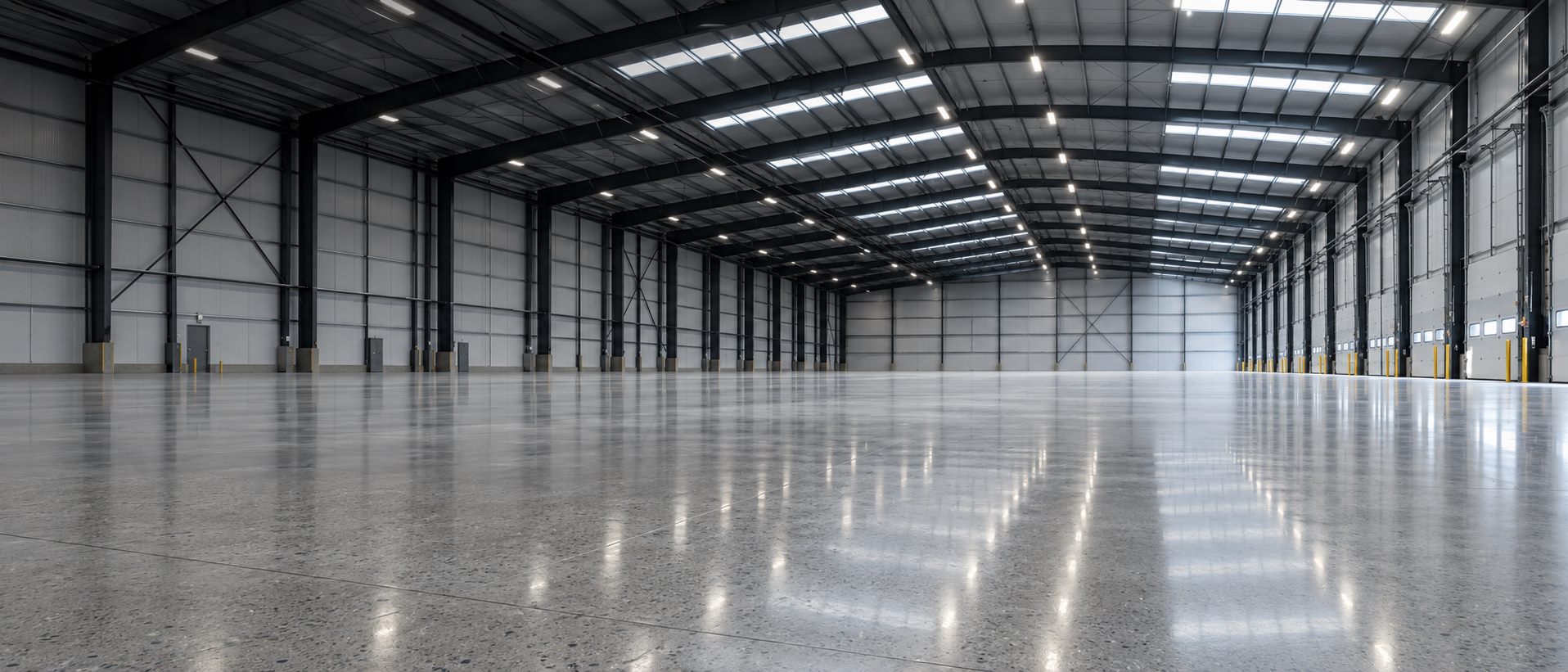
Industrial polishing is used to turn a suitable production or logistics slab into a maintainable wearing surface. It is particularly relevant when dust reduction and efficient mechanised cleaning matter across a large floorplate.
Map forklift routes, wheel types, turning areas, loading, spills and joint condition before choosing a polishing sequence. Operational zones may need different treatments; a decorative sheen alone is not a performance specification.
Warehouses, production facilities, engineering plants and logistics buildings.
A dense, abrasion-resistant floor that is easier to clean and has no coating layer to delaminate.
heavy traffic and continuous industrial operation.
Technical overview
Industrial concrete polishing turns a suitable warehouse or production slab into a dense wearing surface without adding a peelable coating. The specification prioritises abrasion, dust reduction, cleaning efficiency and operational durability.
logistics, manufacturing and engineering floors exposed to wheeled traffic and frequent cleaning.
traffic type, point loads, joint condition, oil contamination, surface hardness, aisle layout and phased access.
Aggregate exposure and sheen are separate choices. A mock-up should show likely tonal variation, repairs and edge treatment.
Use neutral cleaning chemistry, suitable auto-scrubber pads and prompt spill removal. Periodic burnishing or guard renewal depends on traffic and the specified finish.
A power-trowel polished system may be more efficient for a coordinated, well-finished new-build slab.
Specification framework
Record strength, flatness, cracks, joints, historic coatings, contamination and repairs before selecting the cut.
Agree aggregate exposure and sheen separately, with a representative trial including edges and repaired areas.
Describe wheeled and pedestrian traffic, spill exposure, slip considerations and required cleaning methods.
Allow for dust management, phased access, sample approval, protection and handover cleaning.
Delivery method
Condition, flatness, contamination, repairs, access and programme constraints are recorded.
Appearance, performance and realistic slab variation are agreed before full installation.
Our specialist team manages preparation, finishing, protection and handover.
Specification questions
No. Joint repairs and ongoing joint maintenance need their own specification, especially where wheeled traffic repeatedly crosses slab panels.
No. Densifiers and protective treatments can improve cleanability, but concrete remains a porous material. Spill response and maintenance still matter.
Use the cleaning method and chemistry agreed for the finish; avoid aggressive products and abrasive pads that can damage protection or reduce sheen.
Start a conversation
Send the location, approximate area, construction stage, intended use and programme. Include plans or photographs if available; we can then discuss the most suitable next step.