Best suited to
Factories, engineering plants and production facilities.
Power trowel / Manufacturing
Concrete floor specifications shaped around machinery, abrasion, vehicle movements and operational cleaning.
The right system
Factory floors must account for production loads, wheeled traffic, cleaning and potential process contaminants. A power-trowel polished slab may serve general circulation and dry production areas, while some process zones need another specialist finish.
Separate dry, wet, chemical and high-impact zones on the plan. Check equipment bases, point loads, joint layout and future changes to machinery before setting the final surface specification.
Factories, engineering plants and production facilities.
A hard-wearing floor aligned with the operational demands of the facility.
manufacturing traffic, machinery and shift-based operations.
Technical overview
Factory concrete floors are specified around processes as well as traffic. Machinery, vibration, dropped tools, oils, cleaning chemistry and production zoning can all affect the appropriate finish and protection.
manufacturing and engineering facilities needing a robust, easy-to-manage concrete surface.
machine bases, chemical exposure, thermal processes, hygiene zones, line installation and shutdown windows.
The visual result follows the placing and trowelling of the slab. Early coordination matters more than attempting to correct avoidable defects later.
Protect the slab during construction, then use neutral routine cleaning and pads suited to the final treatment. Joint care remains part of the building maintenance plan.
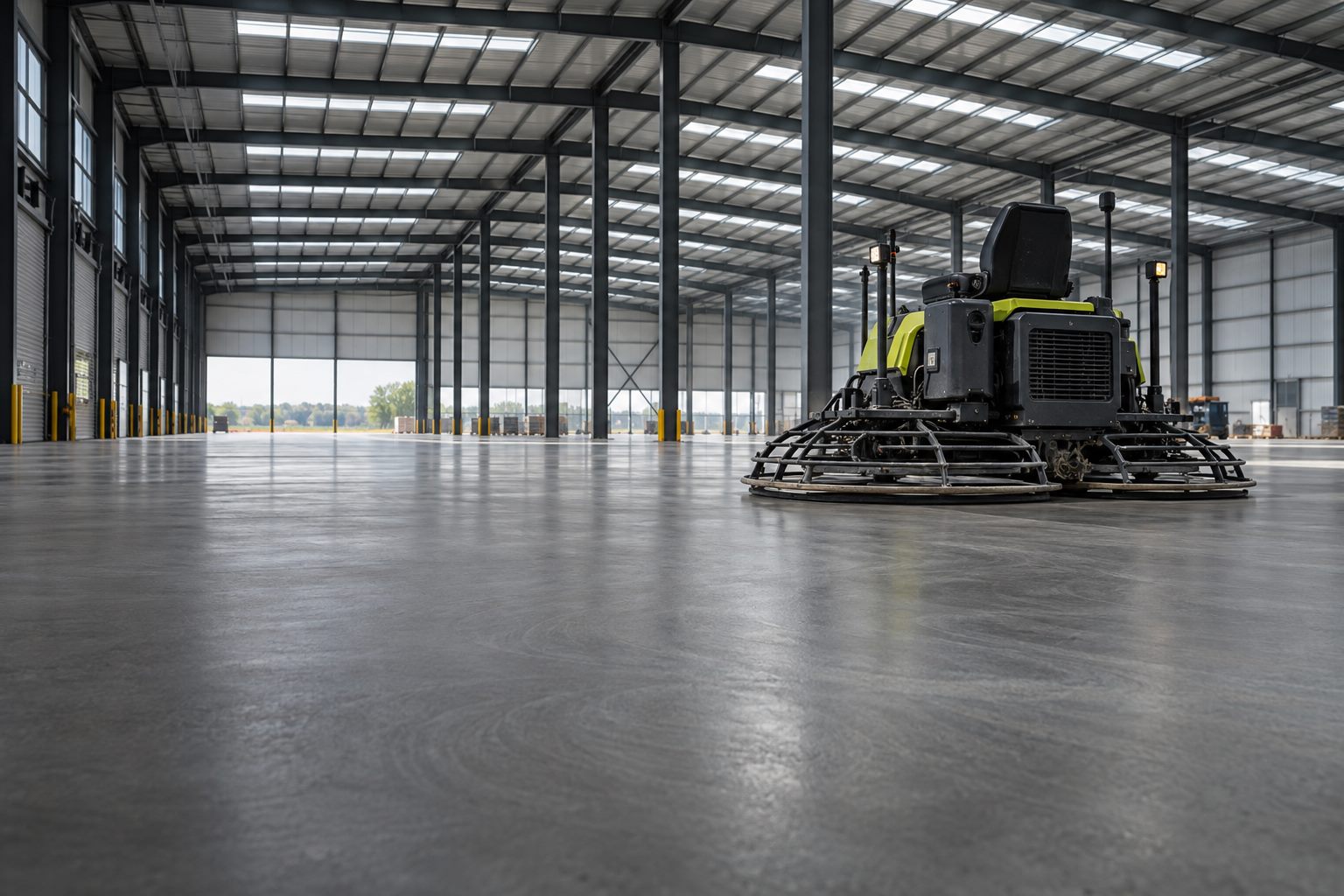
Local resin systems may still be needed in chemically aggressive or highly hygienic process zones.
Illustrative system image; agree the actual finish by sample.Specification framework
Coordinate concrete mix, placement, flatness, joints and the intended finished-surface standard before the pour.
Define trowelling responsibilities, timing, curing method, surface treatment and a realistic sample standard.
Record wheel types, loads, turning areas, contaminants and cleaning equipment for each zone.
Plan construction access and temporary protection so later trades do not compromise the finished slab.
Delivery method
Condition, flatness, contamination, repairs, access and programme constraints are recorded.
Appearance, performance and realistic slab variation are agreed before full installation.
Our specialist team manages preparation, finishing, protection and handover.
Specification questions
Not always. Chemicals, hygiene demands and persistent wet conditions may require a different floor system in selected zones.
No. Trowelling creates the initial surface; any later refinement, densification or protective treatment must be separately specified.
Concrete colour and trowel marks vary with placement and curing. A representative sample sets the expected character, not identical repetition.
Start a conversation
Send the location, approximate area, construction stage, intended use and programme. Include plans or photographs if available; we can then discuss the most suitable next step.