Best suited to
Refurbishments and new-builds where the base slab is not intended as the final floor.
Polished screed / Overlay
A bonded flooring approach that creates a new polishable surface over a correctly prepared substrate.
The right system
A polished screed overlay is a new finishing layer over an existing base. It can change the visual character of a floor without replacing the structural slab, provided the base is sound and the system is compatible.
Confirm available depth at doors and lifts, moisture condition, bond strength, cracks and movement joints. Do not treat the overlay as a way to conceal unresolved substrate problems.
Refurbishments and new-builds where the base slab is not intended as the final floor.
A purpose-made wearing surface with controlled depth, appearance and finish.
sound substrates assessed for a compatible bonded system.
Technical overview
A polished screed overlay is bonded to a mechanically prepared substrate to create a new polishable layer. The substrate still controls movement, so cracks and joints require deliberate assessment and detailing.
a new finished surface is needed without removing a sound structural base.
pull-off strength, cracks, moisture, contamination, primer system, minimum thickness and perimeter details.
Colour and movement are naturally varied. Approve a representative site sample that includes edges, joints and the proposed protection system.
Entrance matting, neutral cleaners and soft mechanical pads help retain the finish. Protective treatment may need planned renewal in concentrated traffic zones.
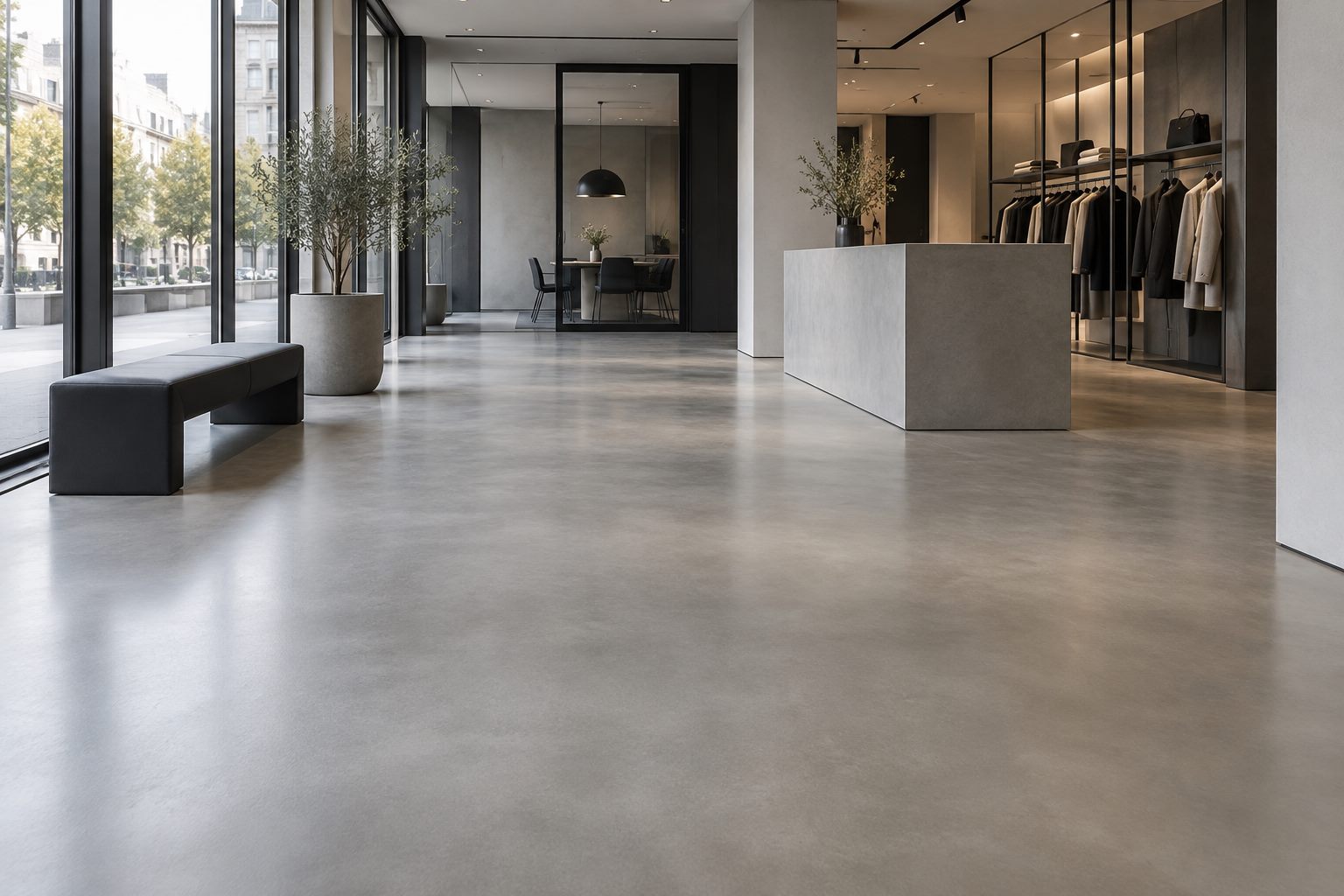
A floating build-up may be needed where the substrate cannot provide reliable bond or movement control.
Illustrative system image; agree the actual finish by sample.Specification framework
Check moisture, strength, cracks, movement joints, contamination and the preparation needed for the chosen system.
Confirm depth, thresholds, door clearances, bond method and compatibility with adjacent finishes.
Agree colour, texture, sheen, sample size and acceptable natural variation.
Allow for curing, trade protection, cleaning guidance and any planned renewal of protective treatment.
Delivery method
Condition, flatness, contamination, repairs, access and programme constraints are recorded.
Appearance, performance and realistic slab variation are agreed before full installation.
Our specialist team manages preparation, finishing, protection and handover.
Specification questions
There is no universal thickness. The minimum depends on the chosen system, substrate, loading and manufacturer requirements, so it must be specified for the project.
No. Existing movement needs to be understood and joints generally need to remain effective through the new surface.
Access and full loading depend on the chosen system, temperature and curing conditions. Confirm a project-specific programme before work starts.
Start a conversation
Send the location, approximate area, construction stage, intended use and programme. Include plans or photographs if available; we can then discuss the most suitable next step.